You Found a Swarm? What should you do...
Instructions:
- Stay Calm
- Swarms are usually gentle and the bees bellies are full of honey
- They are homeless
- Do not spray them
- Contact one of our beekeepers below or find a beekeeper at www.beeswarmed.org
- Or wait for them to move on
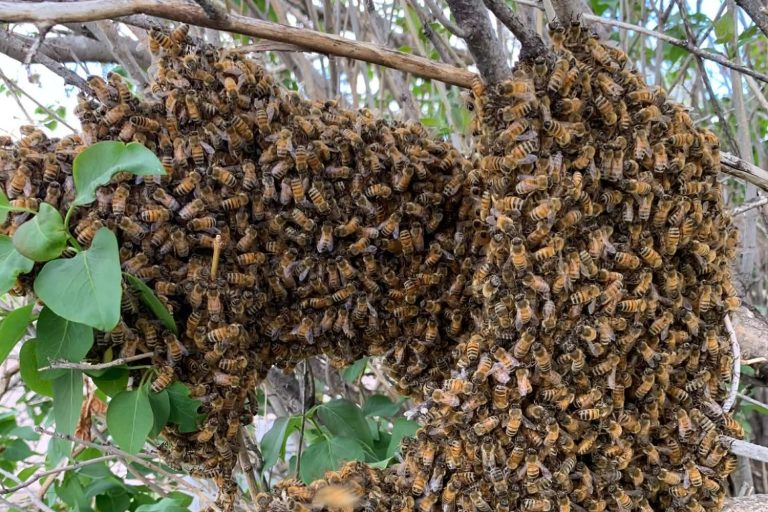
What exactly is a swarm of honeybees?
In the Black Hills, honeybees have the desire to split their colony. This is common between April-June. It is a natural way for honeybees to reproduce and create a new colony.
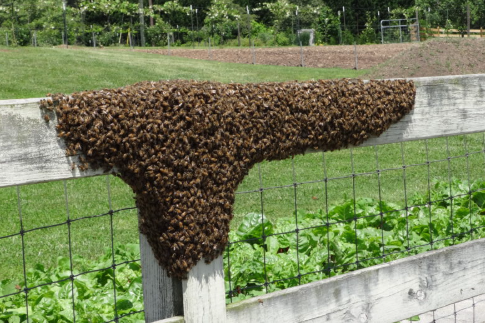
A swarm looks like a softball to basketball size of bees on a tree branch, shrub, fence, or building. It might look alarming, but it is generally temporary as they look for a new home.
They will stay for a few hours to a couple of days while scout bees look for a new home.
Do you have honeybees
or yellow jackets?
We often get calls in July and August to "come get some bees..." this time of year we know it's unlikely honeybees.
We ask that you safely take a picture of the insects that you are concerned about, so we can verify they are honeybees and not wasps or yellow jackets. Yes, yellow jackets and honeybees are often confused by non-beekeepers. That's okay! We can confirm for you. They are similar in size, so it's an honest mistake.
Compare the pictures below if you are unsure before calling us...
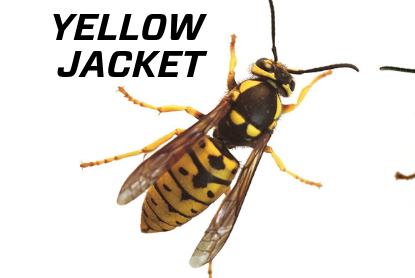
Yellow Jacket
- Bright yellow and black stripes
- Smooth, shiny body (very little hair)
- Narrow "wasp waist"
- Often aggressive, especially in late summer and fall
- Can sting multiple times
- Frequently attracted to human food, garbage, soda, and meat
- Builds nests underground, in wall voids, logs, under eaves, behind siding, etc.
- Call pest control, not a beekeeper
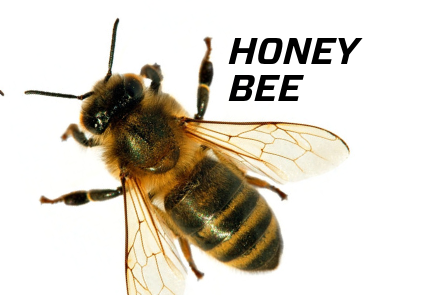
Honey Bee
- Golden brown with darker stripes
- Fuzzy or hairy body
- Thick, oval shape
- Often carrying pollen on their back legs
- Usually docile
- Typically ignore human food
- Can sting only once
- Builds their home inside hollow trees, bee hives, and wall voids
- Swarm April-June
- Call a beekeeper, we will see if we can help
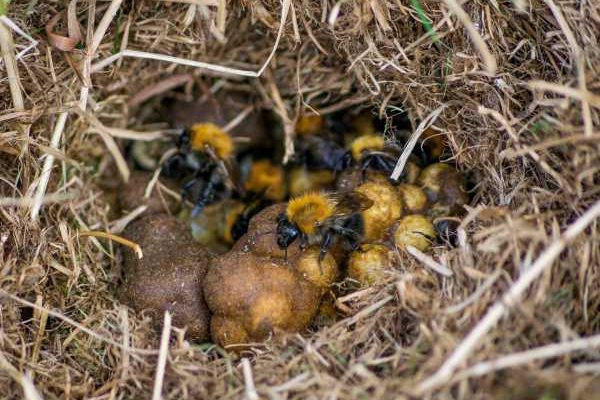
What about Bumblebees?
Bumblebees are native pollinators. They are very important to our gardens, crops and wild plants. Unlike honey bees, their colonies are small and seasonal. If you find a bumblebee nest, simply leave it alone, and protect it if you can.
- Nest in small vole holes, tall grasses, under sheds or decks, brush piles or compost piles.
- Only about 50-300 bees
- Very gentle
- Hibernate in the soil
- Most nests only remain active for 6-12 weeks
- If they are at risk on a school yard or playground, call us, we will see what we can do to attempt to move them

Call A Beekeeper...
We have bee club members all around the Black Hills region! If you do have a swarm of honeybees... check out the list below to find one in your area. If you don't see a beekeeper listed near you, contact us anyways, we will see what we can do about finding someone for you.
What if you just leave them alone?
- They will likely move on
- But feral bee colonies typically only live 1-3 years in the wild
- Beekeeper's can assist honeybees with their pests and diseases, and ensure they live long healthy lives in our care
Found a swarm of bees?
Contact one of our beekeepers below:
Rapid City & Box Elder Area
Sturgis & Belle Fourche Area
Spearfish Area
Deadwood & Lead Area
Rockerville Area
Hot Springs Area
Rosebud Area